
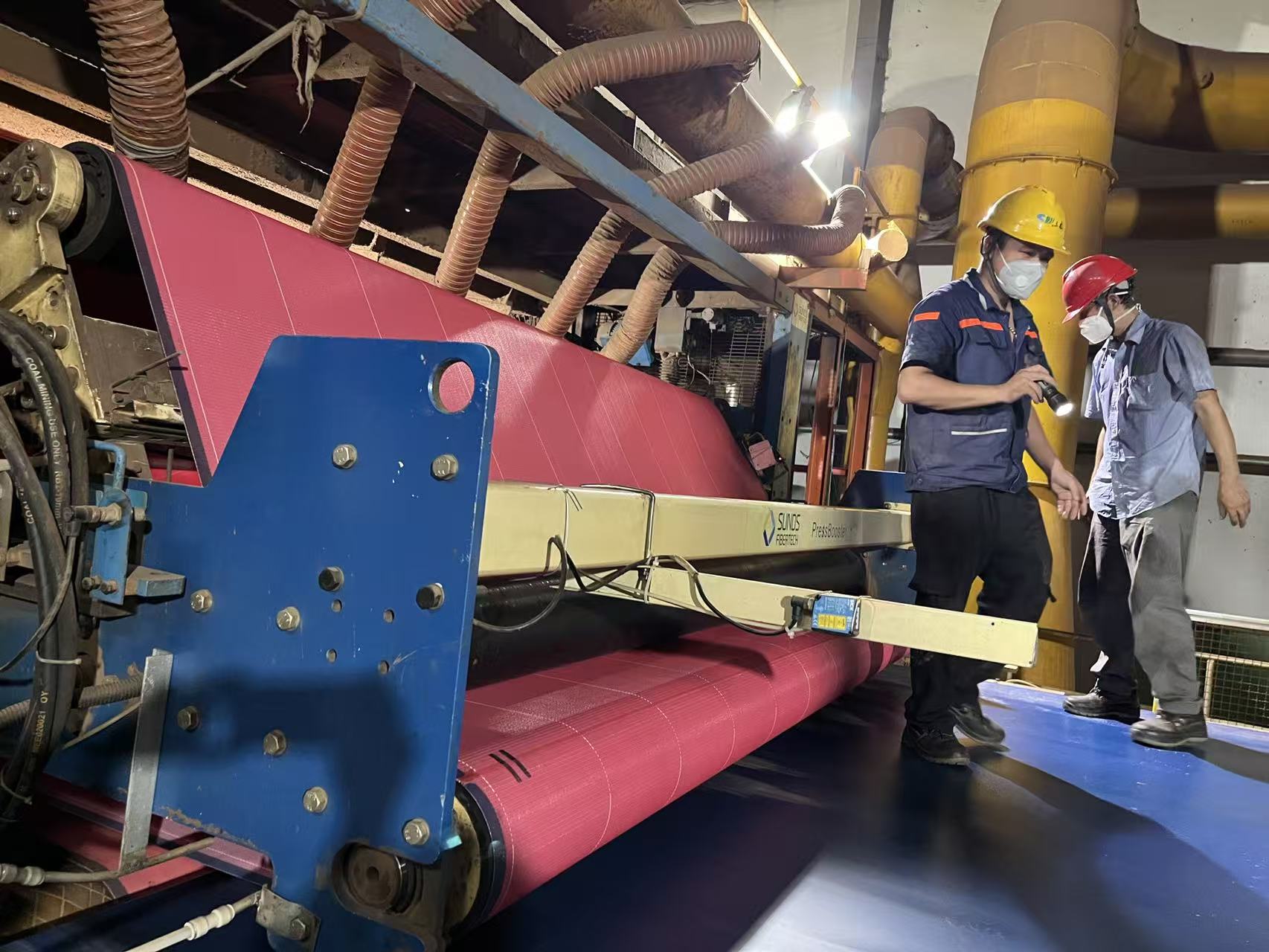
There are many types of Steam Injection Belts on the market. Which one is actually suitable for your production line?
This is a common question when purchasing or replacing a Steam Injection Belt for an MDF or particle board production line.
At first glance, different belts may look very similar. However, differences in material, wire diameter, mesh structure, opening rate, tensile strength, permeability, temperature resistance and joint design can significantly affect their performance.
Therefore, selecting a Steam Injection Belt should not simply be based on dimensions or price.
The right belt needs to match the actual working conditions of the production line.
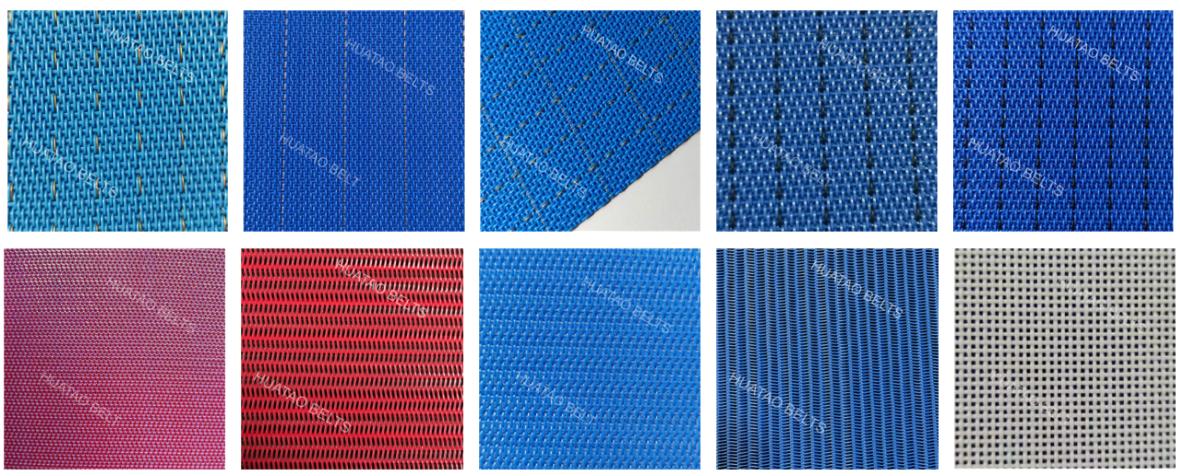
The main reason is that different production lines have different operating requirements.
A Steam Injection Belt needs to perform several functions simultaneously.
It must:
These requirements create many possible combinations of materials and structures.
Therefore, it is difficult to say that one particular Steam Injection Belt is universally the best choice.
One of the most obvious ways to classify Steam Injection Belts is by material.
Stainless steel is one of the common choices for demanding industrial applications.
Typical advantages include:
Different stainless steel grades can also provide different combinations of strength, corrosion resistance and temperature performance.
Therefore, simply saying “stainless steel belt” is still not enough.
The specific steel grade and mesh construction should also be considered.
Carbon steel can also be used for certain industrial mesh belt applications.
Compared with stainless steel, carbon steel may provide a more economical solution where the operating environment permits.
Potential advantages include:
However, moisture, steam and operating conditions must be carefully considered because corrosion resistance may differ from stainless steel.
PTFE-based permeable belts represent another category.
PTFE materials are known for:
However, PTFE-based belts have different mechanical characteristics from metal mesh belts.
They may be suitable for specific applications, but they should not automatically be considered a direct replacement for a metal Steam Injection Belt.
Some applications may require a combination of materials or functional layers.
Composite structures can be designed to balance:
Permeability + Strength + Flexibility + Temperature Resistance + Surface Performance
This makes them useful when a conventional single-material belt cannot satisfy all operating requirements.
This is where Steam Injection Belt selection becomes more complicated.
Even if two belts use the same material, they can have completely different performance because their mesh structures are different.
For example:
Same Material
≠
Same Belt Performance
The following parameters can all influence performance:
Therefore, the belt specification needs to be considered as a complete system.
The mesh structure determines how steam moves through the belt.
A larger open area may provide higher steam permeability.
However, excessive open area can potentially reduce mechanical strength or affect material support.
A smaller opening can provide stronger material retention but may increase resistance to steam flow.
This creates a balance between:
Steam Permeability
and
Mechanical Strength
The optimal design depends on the specific application.
For Steam Injection Belts, open area is an important technical parameter.
It affects how easily steam can pass through the belt.
However, maximum open area does not necessarily mean maximum overall performance.
The belt must still maintain:
Therefore, the best belt is not necessarily the belt with the largest openings.
The diameter of the wire used in a metal mesh belt affects several characteristics.
A larger wire diameter can generally provide greater mechanical strength and durability.
A smaller wire diameter can allow a different balance between flexibility and open area.
The correct choice depends on:
This is another reason why simply specifying “stainless steel mesh belt” is insufficient.
The Steam Injection Belt operates under continuous tension.
If the belt is underspecified for the actual load, it may experience:
The belt should therefore be selected according to the actual operating tension and machine design.
Temperature is another critical factor.
The Steam Injection Belt is exposed to hot steam and potentially elevated material temperatures.
The belt material needs to maintain its required mechanical properties under actual operating conditions.
When selecting a belt, it is important to understand:
A material suitable for one application may not necessarily be suitable for another.
Steam pressure can influence the mechanical requirements of the belt.
Higher pressure and different steam distribution systems may require different mesh structures and belt characteristics.
Therefore, when replacing a belt, it is useful to provide the supplier with the actual steam system parameters whenever available.
A Steam Injection Belt is only as reliable as its weakest section.
In many applications, the joint is one of the most highly stressed areas.
The belt repeatedly passes around rollers, creating repeated bending and mechanical stress.
An unsuitable joint may lead to:
Therefore, the joint method should be considered together with the belt construction.
Instead of asking:
“Which Steam Injection Belt is the best?”
A more useful question is:
“Which Steam Injection Belt is best suited to my machine?”
A proper selection should consider at least:
| Parameter | Why It Matters |
|---|---|
| Machine model | Determines compatibility |
| Belt width | Determines installation |
| Belt length | Determines endless configuration |
| Material | Determines temperature/corrosion performance |
| Mesh opening | Influences steam permeability |
| Wire diameter | Influences strength and durability |
| Open area | Influences steam flow |
| Belt tension | Determines mechanical requirements |
| Operating temperature | Determines material suitability |
| Steam pressure | Influences belt design |
| Belt speed | Influences fatigue and wear |
| Roller diameter | Influences bending requirements |
| Joint type | Influences service life |
| Material load | Influences mechanical requirements |
For industrial production lines, the lowest purchase price does not necessarily mean the lowest operating cost.
A cheaper belt that has:
may result in additional maintenance and production downtime.
A better approach is to consider:
Purchase Cost + Service Life + Maintenance Cost + Downtime Risk
This provides a more realistic evaluation of the total cost.
For Steam Injection Belt replacement projects, HUATAO recommends providing the original belt information whenever possible.
Useful information includes:
If the original specification is available, it is much easier to identify the correct replacement structure.
If the original specification is unavailable, photographs and detailed dimensions can still provide useful information for evaluation.
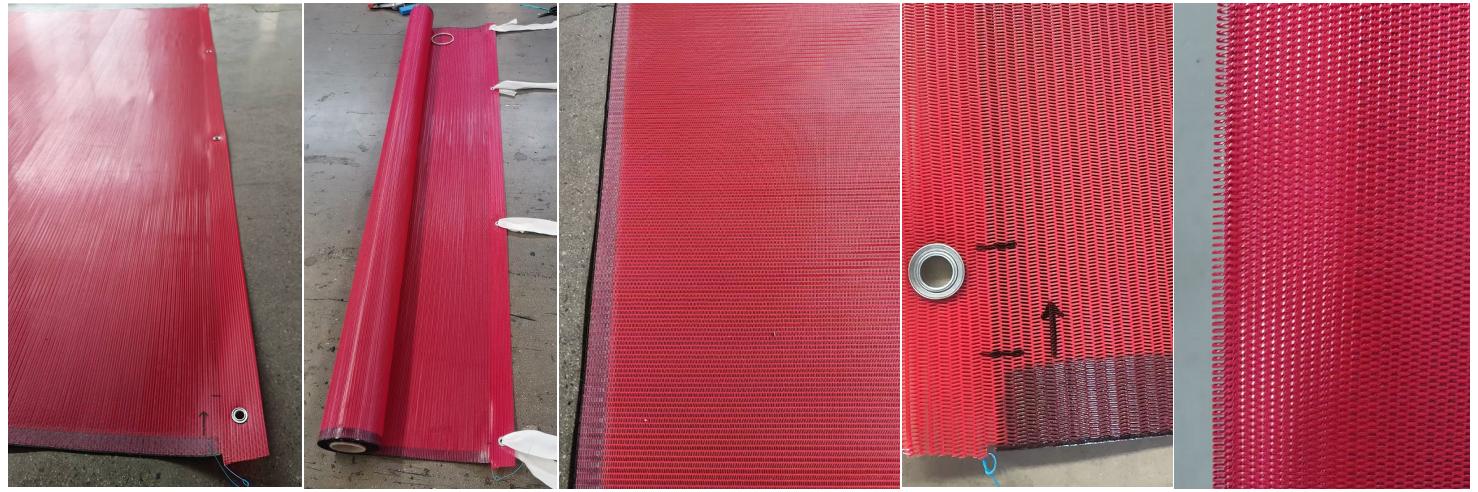
There are indeed many different types of Steam Injection Belts, and this is because the belt needs to satisfy multiple requirements at the same time.
Material is only one factor.
A professional selection should consider:
Material
Mesh Structure
Wire Diameter
Open Area
Tensile Strength
Temperature
Steam Pressure
Belt Speed
Roller Diameter
Joint Design
Machine Configuration
The best Steam Injection Belt is therefore not simply the most expensive belt or the belt with the highest temperature resistance.
It is the belt whose material, structure and specifications match the actual operating conditions of the production line.
For MDF, HDF and Particle Board manufacturers, selecting the right Steam Injection Belt can contribute to more reliable steam penetration, stable conveying performance and longer belt service life.
HUATAO Wood-Based Panel Machinery Co., Ltd.
Email: bella@huataogroup.com
WhatsApp / Tel: +86 17731169773
Website: www.woodpanelmachinery.com
For Steam Injection Belt, Steam Injection Mesh Belt, Steam Press Belt and customized wood-based panel belts, please send us the original belt specifications, machine model, drawings or photos for evaluation.
#HUATAO #MatPreHeaterBelt #DynasteamConveyorBelt #MicrowaveBelt #MicrowaveConveyorBelt #SteamInjectionBelt #SteamInjectionMeshBelt #MDFProduction #HDFProduction #ParticleBoardProduction #WoodBasedPanelProduction #WoodPanelMachinery #MDFMachinery #ParticleBoardMachinery #PreHeatingBelt #HeatingConveyorBelt #IndustrialProcessBelt #SpecializedConveyorBelt #WoodBasedPanelBelt #ConveyorBelt
can not be empty
can not be empty

HUATAO WOOD PROCESSING BELT Co., Ltd
ADD : No.298 Zhonghua North Street, Shijiazhuang 050000 China.
TEL : +86 0311 80690567
EMAIL :bella@huataogroup.com
Web: www.huataobelt.com
 WhatsApp & WeChat : +86 17731169773