
In wood-based panel manufacturing, the finishing stage requires careful handling. After sanding and surface treatment, panels need to be conveyed to the next processing or packaging position without compromising their surface quality.
The conveyor belt plays an important role in this process.
A suitable non-marking conveyor belt should provide stable conveying performance while maintaining appropriate contact with the finished panel surface.
Non-marking conveyor belts are suitable for conveying applications where surface protection is an important requirement.
Typical applications include:
☆ Finished MDF panel conveying
☆ HDF board handling
☆ Particleboard finishing sections
☆ Furniture panel production
☆ Finished board transfer and sorting
In these applications, the belt surface comes into contact with finished panels. Therefore, surface material, cleanliness and contact conditions should be carefully considered.
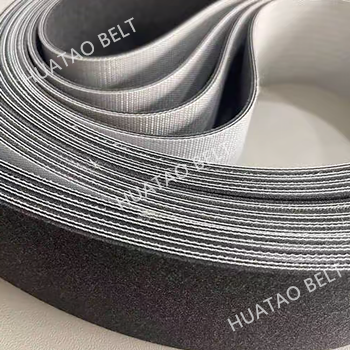
Several technical factors influence belt selection.
Surface Material and Texture
The contact surface should be compatible with the panel finish. A suitable surface helps reduce the risk of unwanted transfer marks under normal operating conditions.
Surface Hardness
Hardness affects how the belt interacts with the panel surface and should be considered alongside contact pressure and panel characteristics.
Dimensional Stability
Stable belt dimensions help maintain consistent conveying and reduce tracking problems.
Antistatic Performance
Antistatic properties may help address static-related concerns in dusty manufacturing environments.
Temperature Resistance
The belt's temperature rating should match the actual working environment.
The M25 belt has a specified total thickness of 4.0 ± 0.02 mm.
Thickness consistency is important when considering:
The minimum roller diameter is specified as 80 mm, which should also be checked against the conveyor equipment.
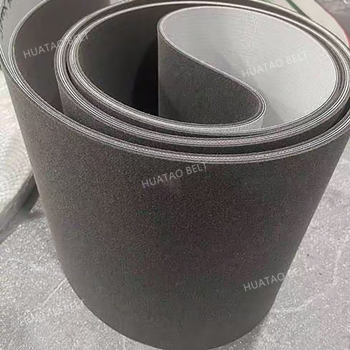
For continuous conveying applications, the belt is supplied as an endless loop.
The reference M25 specification uses a layered toothed splice.
The joint construction should be compatible with the conveyor's roller arrangement and operating conditions. It should also maintain an appropriate running profile.
To evaluate a suitable replacement, please provide:
For wood-based panel finishing lines, conveyor belt selection should not focus on dimensions alone.
Surface material, hardness, thickness, antistatic properties, temperature resistance and splice construction all deserve attention.
Most importantly, the belt should be evaluated under the actual panel-contact conditions to ensure that it does not leave unwanted marks on the finished product.
Protecting the panel surface should remain a consideration throughout the final conveying process.
can not be empty
can not be empty

HUATAO WOOD PROCESSING BELT Co., Ltd
ADD : No.298 Zhonghua North Street, Shijiazhuang 050000 China.
TEL : +86 0311 80690567
EMAIL :bella@huataogroup.com
Web: www.huataobelt.com
 WhatsApp & WeChat : +86 17731169773